


On behalf of the team at Strategy Engineering Research Group we would like to thank all of our speakers, in-person participants and online attendees who came together at the Smart Water Metering And Customer Experience Transformation Congress in Brussels on 22 & 23 June 2026.
One of the strongest strategic messages from the conference was clear: smart water metering is no longer simply a utility modernisation programme.
This was reinforced in the opening keynote presentation from Joachim Maes representing the European Commission’s DG Environment, who positioned smart metering as one of the core data foundations Europe will need to manage scarcity, consumption, environmental pressure and long-term economic resilience.
From the European Commission’s perspective, it is becoming part of Europe’s wider water resilience agenda—supporting leakage reduction, demand management, abstraction monitoring, climate adaptation and more intelligent water planning.
Another central issue Joachim emphasised was Europe’s ability to turn trusted water data into a strategic decision-making asset. Smart metering, in this context, is not just about consumption visibility; it is about giving utilities, regulators and policymakers the evidence base to understand where water stress is emerging, where leakage is occurring, which users can realistically reduce demand, and where better insight could defer or reshape future infrastructure investment.
A particularly important message from the keynote was that household smart metering alone will not be enough. Europe will also need stronger data from commercial and industrial users, agriculture, distribution networks, leakage zones, abstraction points and environmental monitoring systems.
Download the full Chair’s Report and Media Package today.
The pack includes the complete report with organised strategic takeaways and speaker-led recommendations, full Q&A transcripts, all available presentations, and full audio-video recordings.
Evelyn De Meyer, Manager Smart Metering, De Watergroep
The Flanders case study was especially valuable because it showed what smart metering looks like when it moves from ambition into mandated, large-scale operational delivery.
Smart water meters are now mandatory for households in Flanders, meaning customers cannot refuse the installation of a digital water meter. A legal mandate creates momentum, but it does not remove the operational, technical, customer and data challenges of rollout.
For De Watergroep, Farys and Pidpa, the target is to replace roughly 2.8 million analogue water meters with digital meters by 31 December 2030. The decree also clarifies data processing and states that customers cannot decline a digital water meter.
The 2030 deadline means the companies have to replace meters at roughly twice their normal replacement speed. Evelyn made clear this has a major operational impact and requires both internal technicians and external contractors.
Evelyn highlighted that some customers do not respond to appointment requests, even after emails and paper forms. Others are not present when technicians arrive. In other cases, the meter is physically inaccessible because customers have built cupboards or other structures around it.
The Flanders model relies heavily on collaboration with Fluvius, using the digital electricity meter as a “taxi” to transfer water meter data. The water meter sends data by M-Bus to the electricity meter, then via narrowband IoT to the smart water platform and onwards to the water companies. More than 95% of current meters for Pidpa, Farys and De Watergroep are coupled with the electricity meter.
This is one of the most illuminating points of the whole case study: coupling water and electricity metering can create real efficiency, but it also makes the water utility dependent on another infrastructure, another organisation and another technology roadmap.
Evelyn explained the digital meter chain using a simple example. If 100 digital water meters are installed, around 87 may be connected to the digital electricity meter. Some are not connected because there is no digital electricity meter, the distance is too great, or coupling cannot be made. After further losses in the smart water platform and back-office transfer, around 80 out of 100 may be fully digital/smart at that point. The final expectation is a 95% smart digital meter success rate, with around 5% remaining non-smart due to location-specific constraints.
The continuous consumption alert is already automated. Flanders defines this as three litres per hour for three consecutive days. When that threshold is met, the customer receives an email or letter.
When asked about ROI, Evelyn was very honest: for now, digitalisation is a cost and is not yet beneficial financially. The expected benefits are long-term, for both the drinking water companies and customers, linked to sustainability goals and further reduction in drinking water consumption.
When asked whether De Watergroep segments customer communications by household type, Evelyn said that for now the communication is general and that this is considered acceptable. However, she acknowledged that it may be improved over time as they learn more.
The Flanders case study showed that smart metering success is not created by the meter itself. It is created by the operating model around the meter: the legal mandate, the installation machine, the data chain, the alert logic, the customer communication model, the contractor ecosystem and the ability to convert readings into trusted action.

Simon Granath, Teamleader Smart Distribution Network, VA SYD (Sweden)
Simon’s VA SYD case study was one of the strongest operational architecture presentations because it showed smart metering as something much bigger than meter replacement.
The core lesson was this:
VA SYD did not procure smart meters as a billing upgrade. They built a flexible digital distribution architecture designed to support leakage reduction, demand management, customer engagement, operational analytics and future IoT expansion.
The standout feature was the maturity of the thinking: VA SYD designed for changeability, data ownership, interoperability and internal capability from the start, rather than buying a closed metering system and trying to adapt it later.
Meaning that the smart meter was treated as part of the distribution network intelligence system, not just a customer billing device.
VA SYD has around 13% water loss, with Malmö at around 12%, while the Swedish average is around 20%. Their target is to reduce losses towards an ILI of 2.0 and around 8% water loss by 2030.
VA SYD knew early that its rollout would take around ten years and that the technology purchased in 2020 would look very different by 2030. That shaped the entire procurement philosophy.
Simon said most Swedish projects at the time were based on Wireless M-Bus and different vendor-lock-in solutions. VA SYD was one of the first utilities in Sweden to explicitly demand a different approach, even facing legal challenges during procurement, which it ultimately won. Therefore, avoiding vendor lock-in was a strategic procurement principle.
Va Syd Did Not Simply Buy Meters. They Bought Performance
VA SYD placed connectivity responsibility inside the tender. The requirement included 98% of sensors delivering data at least once every ten days, with a minimum reading frequency described as at least once per day. The tender also included bonus requirements around main-system leak detection, water pressure information and battery lifetime in relation to data transmission frequency.
VA SYD uses LoRaWAN and had already started building its own LoRaWAN network in 2019 to support surveillance of the piping system. Smart meters and other sensors could therefore communicate through one system.
One of Simon’s most useful procurement lessons was that many products look similar on paper but behave very differently in reality. VA SYD now requires tenderers to submit test samples, which are externally reviewed for construction, hardware and antenna performance. Testing can reveal issues such as poor shielding, weak antenna design or components that would never be visible in a specification sheet
Simon described a system where LoRaWAN sensors send data through VA SYD’s own gateways or Netmore gateways, then through ChirpStack, an IoT platform, an on-premises joint server with end-to-end decryption, Node-RED, and then into a Timescale database. From there, data is integrated into customer apps, My Pages, billing, leakage systems, customer APIs and Grafana.
The architecture was designed to be changeable. Some elements are harder to replace than others, but the principle is that no single component should trap the whole system.
The VA SYD case study showed that the strategic value of smart metering is created by the architecture around it: open data access, flexible integration, tested hardware, internal data capability, operationally useful tools and the ability to turn partial coverage into real-time intelligence. Simon’s presentation was essentially a blueprint for how a utility can avoid becoming dependent on a vendor system and instead build its own long-term digital water capability.


Smart Meters Do Not Replace Leakage Detection At Aqaba Water Jordan —Instead, They Make Leakage Detection Smarter
A compelling operational case studies came from Ehab Bani, Head of the Non-Revenue Water Section at Aqaba Water Company in Jordan.
Rather than positioning smart metering primarily as a billing technology, Aqaba Water has embedded it directly into its leakage reduction and non-revenue water strategy.
Smart meters are helping engineers decide where to investigate, where to prioritise resources and where losses are actually occurring.
“Smart meters should not be viewed as a replacement for traditional leakage detection. Instead, they make conventional leakage investigation significantly more effective”.
Where an area shows unusually high losses, customer consumption data can be compared against network inflows to establish a localised water balance.
Rather than searching an entire district, operational teams can focus their resources on increasingly smaller sections of the network.
The result is faster investigations, more efficient deployment of field crews and a much higher likelihood of locating the true source of water loss.
Apartment Living Creates a New Smart Metering Challenge Beyond the Main Meter
A key recurring theme across both days of the conference was the growing importance of apartment buildings and the limitations of relying solely on the primary utility meter.
This challenge was explored from several different perspectives, most notably by Sofia Lettenbecker, Managing Director of WE Data Europe, alongside discussions from European utilities.
If a significant proportion of a utility's customers live in apartment buildings, then leakage, consumption visibility and customer engagement do not stop at the main building meter.
Utilities increasingly need to consider a wider ecosystem that includes sub-metering, landlord engagement, tenant communication and, where appropriate, consumption-based billing.
In many apartment developments, the utility or sub-metering company has no direct relationship with the tenant.
Instead, the contractual relationship often exists solely with the building owner or property manager.
That creates an important behavioural challenge.
The landlord frequently determines whether tenants receive consumption data, leak alerts, platform access or usage reports.
If that information is delayed—or never reaches the resident at all—the opportunity to influence behaviour is dramatically weakened.
Annual billing information arrives far too late to encourage meaningful behaviour change.
Instead, customers need regular and timely feedback.
The broader lesson is that customer engagement depends less on the technology itself and more on ensuring the right information reaches the right person quickly enough for them to act.
Another takeaway from WE Data Europe challenged the assumption that successful smart metering requires increasingly sophisticated customer platforms.
Sofia argued that utilities should first focus on delivering a small number of genuinely valuable services exceptionally well before investing heavily in complex dashboards that many customers rarely use.
Leak detection remains one of the clearest examples.
Simply notifying customers that a leak is occurring already delivers significant value.
Advanced analytics should then be used to make those alerts more actionable rather than more complicated.
For example, algorithms may be able to indicate whether abnormal consumption is most likely being caused by:
- a leaking toilet;
- a continuously running tap; or
- a burst pipe.
Instead of leaving customers to investigate the entire property, analytics can narrow the search and significantly reduce the effort required to resolve the issue.
Sofia also offered an important strategic perspective on changing public attitudes towards water scarcity.
Drawing on her experience in Austria, she observed that many people have traditionally assumed water will always be plentiful because it originates from mountain catchments.
However, disappearing glaciers, reduced river flows and increasing pressure on groundwater resources are changing that perception.
As more regions across Europe begin experiencing genuine water stress, the public case for smart water metering is likely to become considerably easier to communicate.

Olivier Carmona, Chair, OMA SpecWorks Water Utility Working Group
Olivier Carmona’s core point was that the water sector needs to move beyond vague claims of interoperability and towards testable, procurement-ready standards. Through OMA SpecWorks, the Water 2.0 initiative is developing vendor-neutral technical profiles and conformance requirements for smart water metering, built around OMA LwM2M 1.2.2.
Utilities need to know that smart meters can be remotely managed, securely onboarded, updated, recovered, integrated and operated across multiple vendors over a 10-to-15-year lifecycle.
Water 2.0 is intended to give the market a common framework for that, reducing custom integration, avoiding vendor lock-in and making interoperability something that can be tested rather than merely promised.
Olivier also made clear that existing standards should not be ignored.
In the panel discussion, he pointed to Wireless M-Bus and the OMS data model as existing foundations for meter data definitions, while stressing that security and Cyber Resilience Act readiness should be prioritised early because they are extremely difficult to retrofit once devices are deployed.
The real message was not simply that utilities need standards. It was that they need testable, certifiable, procurement-ready interoperability through Water 2.0 and OMA LwM2M 1.2.2, so connected water devices can be managed securely and affordably over their full lifetime.
Frederic De Vrieze, Member of the Board, CX Brussels
Do Not Lead With Technology. Lead With Trust, Purpose And Customer Benefit.
Frederik opened by saying that if utilities want to change customer behaviour, it has to be built around trust. Smart metering will not be accepted simply because the utility says it is necessary. Customers need to understand why it matters and why they should believe in it.
He acknowledged that there is reluctance in Belgium toward smart metering. Some customers are suspicious, resistant or worried about the implications of the technology.
Communication Should Explain The “Why”, Not Just The Installation Process
Frederik repeatedly stressed that customers need to be properly informed. The issue is not just telling them a meter is being changed, but explaining why the change is important.
Leak Detection Should Be Framed As Customer Protection, Not Just Operational Efficiency
He gave the example of an elderly couple receiving a €75,000 bill after a leaking or burst pipe. His point was that smart metering could have detected the problem earlier and prevented a catastrophic financial shock.
Frederik said customers need to understand that smart metering can reduce their bill or help prevent extreme bills caused by undetected leaks.
The strongest customer message is not “we are digitalising”. It is “we can help protect you from waste, leaks and unexpected costs.”
When asked how to manage customers who do not understand, trust or accept the move from dumb meters to smart meters, Frederik said the answer is to inform people well rather than simply impose the technology.
A rollout that feels imposed risks creating resistance. A rollout that feels explained has a much better chance of acceptance.
Frederik referenced Sibelga, the Brussels network operator, which ran an information campaign to convince customers why smart metering mattered.
Smart metering needs campaign thinking, not just operational notices.
Sibelga did not run one generic rollout message. They segmented by customer type, including one-person households, SMEs, building size and apartment buildings.
Smart metering communications should be segmented like a customer campaign, not broadcast like a utility notice.
Frederik said Sibelga followed up with customer feedback to understand whether people were satisfied with implementation.
Customer satisfaction should be measured during rollout, not only after complaints appear.
One of his strongest practical points was that the technician installing the meter made a major difference to customer satisfaction when they explained the change properly.
Do Not Wait For Customer Resistance. Get Ahead Of It
He repeatedly stressed the need to be proactive. Customers should be informed before problems escalate and before misinformation fills the gap.
Do Not Assume Smart Metering Communication Should Only Be Digital. Paper Can Still Cut Through, Especially With Older Or Less Digitally Engaged Customers
In response to Sophia’s point about reaching less digitally savvy customers, Frederik said letters are now rare enough that they can be powerful: if people receive a letter, they tend to read it.
When asked about data granularity, Frederik said utilities can have too much data. The important thing is having the right data.
The question is not “how much data can we collect?” It is “which data helps customers and utilities make better decisions?”
Frederik suggested utilities could apply marketing segmentation and A/B testing to understand what works.
Customer engagement should be tested and optimised. Utilities should not assume the first message is the right message.
He said the smart metering campaign and the changes around it happen in several phases. Utilities can compare old and new customers, understand benefits and then improve the communications that follow.
Customer engagement should evolve through the programme. It should not be a one-off launch communication.
The Post-Installation Phase Is Where Customer Understanding And Behaviour Change Either Develop Or Disappear
Frederik said the communication after the study or rollout is very important. In other words, the customer journey does not end once the meter is installed.
When asked about failures or things to avoid, Frederik said the key customer experience principle is to be proactive rather than reactive. Waiting for something to go wrong and then waiting for the customer to contact the utility is the wrong approach.
He warned against expecting customers to log into a portal to discover important information. If the utility already has the numbers, it should send alerts rather than wait for customers to find the issue themselves.
Portals are useful for engaged customers, but they are weak as the main behavioural-change mechanism.
Frederik said utilities should send alerts where they have the data, rather than passively waiting for customers to consult a platform.
Critical information should be pushed to the customer, not hidden behind a login.
Gamification May Help Reduce Consumption
Behaviour change can be made more engaging, but it needs to be applied selectively.
He suggested that utilities could use gamification to help customers see how they can reduce water use, especially where regions are facing real water stress.
When asked whether gamification works across all segments, Frederik said it may work more for Gen Z, but utilities must look at what works for each segment. Some customers may respond better to direct alerts, clear information or financial impact.
One engagement method will not work across the whole customer base.
Frederik referenced his conversation with DEWA, where smart metering is essential because water comes from desalination and is understood as precious. He contrasted this with Europe, where people have historically opened the tap and assumed water will always flow.
European utilities need to help customers understand that water resilience is no longer guaranteed.
He said the future will be different, and that this is when measures such as smart metering become necessary.
Smart metering should be linked to the wider water resilience story, not just billing or operational efficiency.
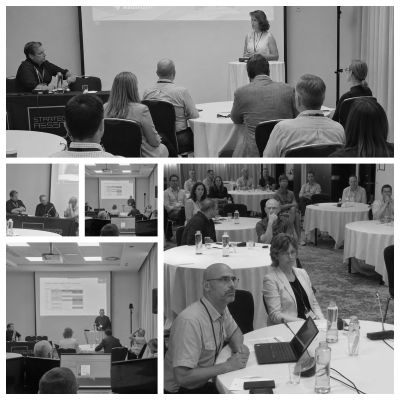
This concludes the Chair’s highlights from the 2026 Smart Water Metering & Customer Transformation Conference.
These highlights capture only part of the discussion. Over 45% of the event was dedicated to extended Q&A, curated audience discussion, roundtables and additional case-study sessions, including the Yorkshire Water vendor case study on using video and captured intelligence to improve the resolution of customer-related operational problems.
For those who want to access the full depth of the discussion, the post-conference media and report package is now available.
This package includes all available presentations, full video and audio recordings, extended Q&A, roundtable discussions and a structured post-conference report bringing together the most situationally relevant strategic recommendations from speakers, case studies and audience contributions.
It is designed to give utilities, solution providers and sector stakeholders a much deeper understanding of the practical lessons, implementation challenges and emerging opportunities discussed across the full conference programme.